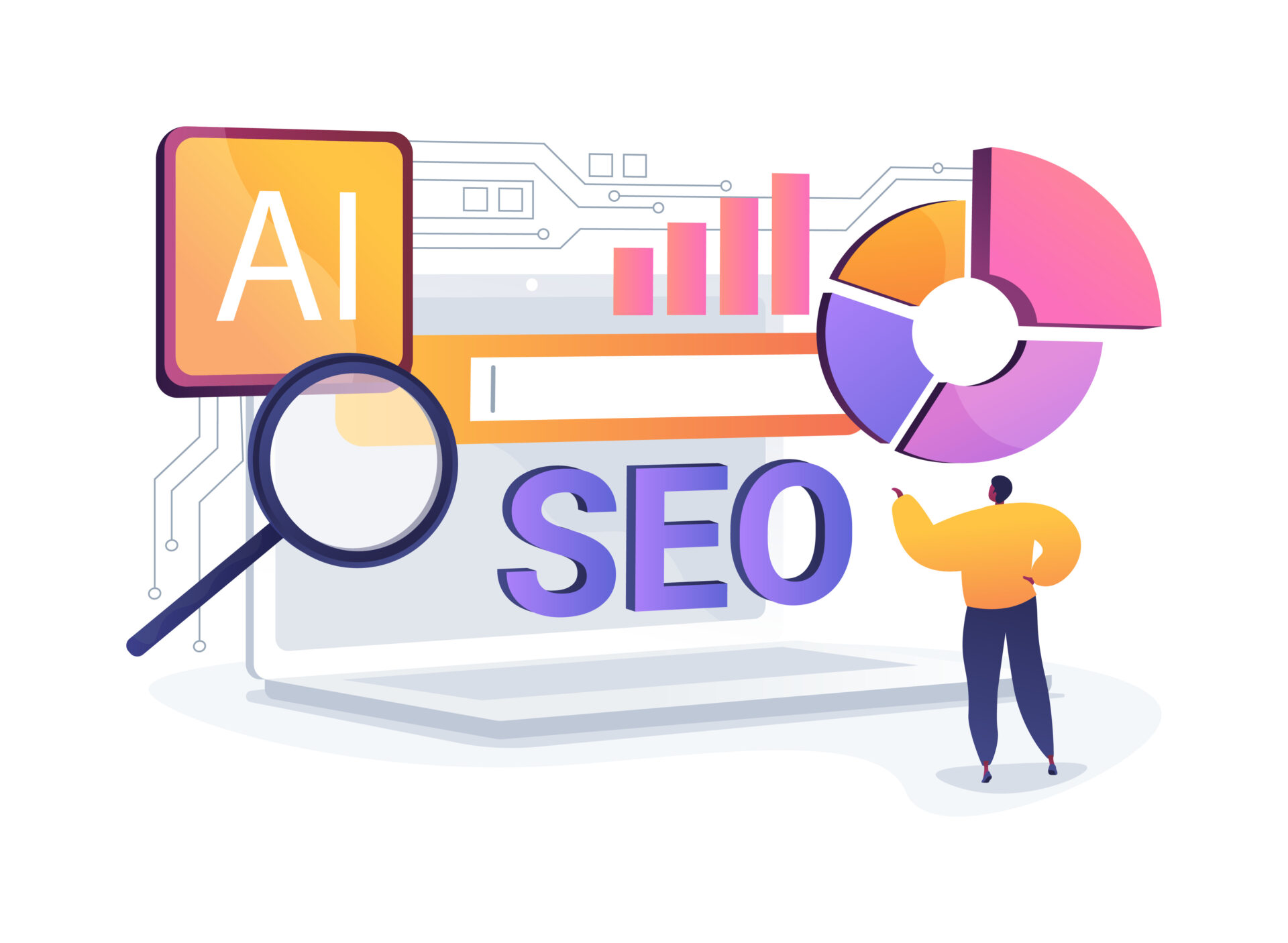
Is Your Website Visible to AI? A Guide to AI SEO, AEO, and the Future of Search Visibility
Search is changing faster than most businesses realize.
For years, SEO focused on one goal: ranking on Google’s results page. Today, users are increasingly getting answers directly from AI tools like Google’s AI Overviews, ChatGPT, Perplexity, and other generative search engines, often without clicking a single website.
That shift creates a new question every business needs to ask:
Is your website actually visible to AI search systems or is it being ignored?
If your content is not structured for AI interpretation, you may still rank in traditional search but lose visibility in AI-generated answers. That means fewer citations, fewer impressions, and fewer opportunities to be discovered.
This is where AI SEO (AEO and GEO optimization) comes in.
Below is a practical breakdown of how to improve AI visibility and future proof your SEO strategy.
What “AI Visibility” Actually Means for SEO
AI search does not just list websites. It extracts, summarizes, and cites content.
Instead of sending users to 10 blue links, AI systems:
Pull answers from trusted sources
Summarize key points into a direct response
Cite a small number of websites
Prioritize structured, authoritative, easy to understand content
That means SEO is no longer just about ranking.
It is about being:
Understandable to machines
Extractable into summaries
Trusted enough to be cited
Structured around intent, not just keywords
If your content is not built this way, AI may simply skip over it.
Top 6 AI SEO Strategies to Improve Your Website Visibility
1. Optimize for AI Overviews (AEO – Answer Engine Optimization)
AI Overviews and generative search tools reward content that directly answers questions in a structured format.
To increase your chances of being cited:
Write content in question and answer formats
Add FAQ sections to service pages and blogs
Provide clear, direct answers within the first 2 to 3 sentences
Expand answers with deeper context (“why” and “how,” not just definitions)
Use headings that mirror real search queries
Example:
Instead of:
“We offer digital marketing services tailored to your needs…”
Use:
What does a digital marketing agency do?
A digital marketing agency helps businesses increase visibility online through SEO, paid ads, content marketing, and conversion optimization…
AI systems prioritize clarity, structure, and directness.
2. Use AI for Predictive SEO and Content Gap Analysis
Modern SEO is no longer reactive. It is predictive.
AI tools can analyze search data and competitor content to identify:
High value keywords your competitors rank for
Topics your site is missing entirely
Emerging search trends before they peak
Content gaps with high intent but low competition
Instead of Asking:
“What should we blog about?”
You are Asking:
“What topics will drive traffic and conversions in the next 3 to 6 months?”
3. Improve Technical SEO with Machine Driven Audits
AI search systems rely heavily on clean, accessible, and fast websites.
Technical issues can reduce both rankings and AI visibility.
AI powered SEO auditing tools can continuously detect:
Broken internal and external links
Slow mobile performance and Core Web Vitals issues
Missing schema markup, a major factor in AI understanding
Crawlability and indexing problems
Duplicate or thin content issues
Instead of periodic audits, AI enables continuous optimization.
A technically clean website is far more likely to be trusted and cited by AI systems.
4. Use Keyword Clustering to Build Topical Authority
AI search no longer rewards isolated keywords. It rewards topic authority.
Keyword clustering uses AI to group related search terms based on intent, such as:
“SEO agency near me”
“best SEO company”
“SEO services for small business”
Instead of targeting each separately, AI helps group them into a single content strategy like:
“SEO services for small businesses”
This approach helps you:
Build stronger topical authority
Improve rankings across multiple related searches
Avoid keyword cannibalization
Create deeper, more comprehensive content hubs
Search engines and AI systems both favor websites that fully cover a topic, not just mention it.
5. Strengthen Structured Data, Schema, and Content Formatting
If AI cannot clearly interpret your content, it will not use it.
Structured data (schema markup) and formatting are critical for AI SEO
To Improve Visibility
Add schema markup for services, FAQs, articles, and reviews
Use clear H1, H2, H3 hierarchy throughout pages
Break content into short, scannable sections
Use bullet points, lists, and tables where appropriate
Avoid burying key answers in long paragraphs
This helps AI systems quickly identify:
What your page is about
What questions it answers
Whether it should be cited in responses
Structured content increases the chance of AI inclusion.
Make it a little shorter
6.Build Trust with Google Reviews and Online Reputation
Google Reviews are no longer just important for local SEO. They also help AI systems understand your business and evaluate its credibility.
AI platforms analyze review content to identify:
The services you provide
Customer experiences and outcomes
Industry-specific keywords and topics
Overall reputation and trustworthiness
Reviews Help AI Understand Your Business
Detailed reviews often contain valuable information about your services and results. Over time, this customer feedback helps AI build a clearer picture of what your business does and why customers choose you.
Reviews Act as Trust Signals
Businesses with a strong review profile often have an advantage when it comes to visibility. Factors such as:
High ratings
Consistent review volume
Recent feedback
Detailed customer comments
Can all help strengthen your online authority.
Focus on Quality, Not Just Quantity
Encourage customers to leave detailed reviews that explain the service they received and their overall experience. Specific reviews provide more value to both search engines and AI systems than generic comments like “Great company.”
Bonus: AI SEO Works Best When Content Is Built Around Intent
AI systems are increasingly focused on intent based relevance, not exact match keywords.
That means strong SEO content today:
Solves a real problem
Answers a specific question clearly
Covers the topic in depth
Is structured for easy extraction
When you combine intent driven content with strong technical SEO, you significantly improve both traditional rankings and AI visibility.
Final Takeaway: SEO Is Now AI Plus Search Engine Optimization
We are no longer optimizing just for Google search results.
We are optimizing for:
Google AI Overviews
Chat based search engines
Voice assistants
Generative answer engines
Traditional SERPs
If your website is not structured for AI readability, you are likely losing visibility even if your rankings look stable.
The companies that adapt now will dominate both search results and AI generated answers.
Is Your Website Visible to AI Search?
At M3 Agency, we help businesses adapt their SEO strategy for the AI era, combining technical SEO, content strategy, keyword clustering, and AI driven optimization.
If you want a clear, data backed plan to improve your visibility in both traditional search and AI generated results, we can help you map exactly what needs to change.
Let’s make sure your website is built not just to rank but to be found, cited, and trusted by AI.